

About Pachmarhi

Heritage

Where Nature, Spirituality, and Heritage Coexist

Pachmarhi, the only hill station of Madhya Pradesh, fondly known as the Queen of the Satpuras, rests in the Narmadapuram district like a place gently preserved by time. Surrounded by the dense greens of the Satpura Range, it carries an ease and stillness that feels rare, offering experiences that are both immersive and quietly profound.

Layered with British-era charm, rich tribal heritage, and a quiet spiritual presence, Pachmarhi hill station offers sweeping panoramas, cascading waterfalls, crystal clear streams, and verdant forests. For years, it remained known only to a few travellers until Captain James Forsyth, a British officer, came upon it in 1857. Deeply taken by its beauty, he later described it in The Highlands of Central India (1871) as a “real paradise” and a “wonderland,” bringing Pachmarhi into wider attention.

The town offers countless escapes that gently pull you away from the demands of everyday life, turning even the most awaited holidays into moments that feel both meaningful and memorable.

Legacy of the British Raj

Pachmarhi once flourished as the summer capital during the British era, a time that lent the town its distinctive grace and character. Remnants of this legacy are visible across its landscape, where elegant colonial structures and historic landmarks continue to lend a sense of refinement and timeless appeal.

The Catholic Church of Pachmarhi stands as a striking example of British colonial design, marked by its refined structure and timeless appeal. The British also introduced spaces for leisure and recreation, establishing polo grounds, the Pachmarhi Club, and a golf course that echoed their lifestyle.

Taynum Pool, commissioned by the British Governor Sir Henry James Taynum, remains one of the notable creations from that period. Nearby, at Apsara Vihar, a grave dating back to the same era is believed to hold soldiers who lost their lives during World War II, adding a layer of historical depth to the landscape.

The Governor’s House, Bison Lodge, and the Company Garden continue to stand with a sense of presence and legacy, each contributing to the town’s old-world elegance and giving Pachmarhi a character that is both historic and enduring.

BritishRaj
LifeRootedinNature

Tribal Heritage – Life Rooted in Nature

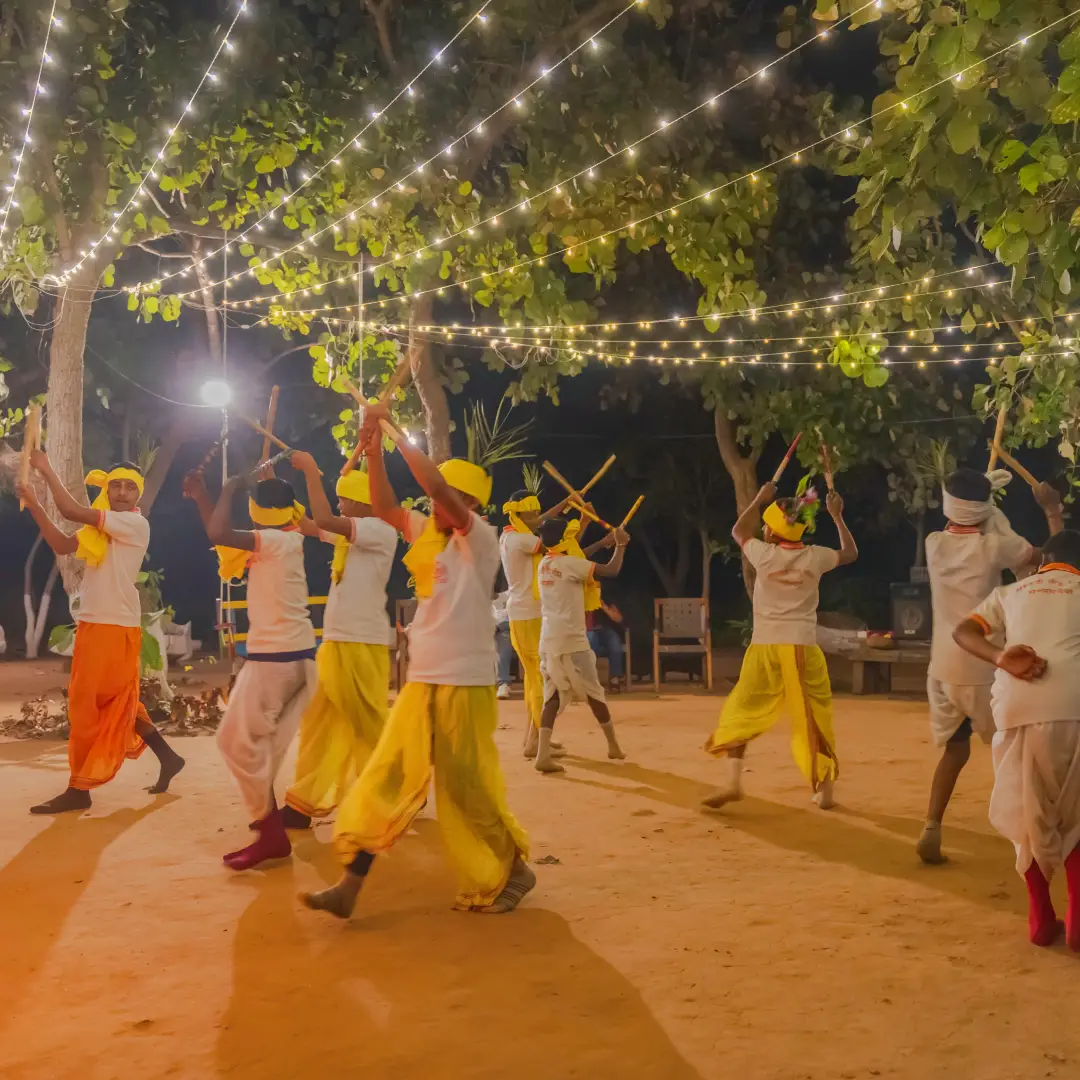
Pachmarhi holds a rich cultural heritage, with its indigenous tribes – The Gonds and the Mawasis, their mesmerising age-old rock art and traditions. It’s a place where prehistoric rock paintings tell stories of early life. Sacred spots like Mahadev Cave, Nagdwari, and Jatashankar add a spiritual presence that continues to draw devotees.

The Gonds, Korkus, and the Mawasis are the most prominent tribes that have lived close to these forests for generations. Their culture is still reflected through their age-old traditions.

Mahua is one of the most important plants among them, and they even use it for the prediction of weather and agricultural yields.

A few Gond clans consider themselves Nagwanshis; they celebrate Nagpanchi by offering milk to the snakes.

Their customs are derived from the wild, as they sow seeds according to nature’s cues, like the rainbows and rainfall.

The tribal women play a crucial role in their household’s economy, sharing responsibilities of agriculture.

Even today, their way of life continues with the same warmth and authenticity, keeping the spirit of their culture alive in the most natural way.

The Lay of the Land and the Perfect Season to Explore

Location

Pachmarhi is the only hill station in Madhya Pradesh, located in the Narmadapuram district at an altitude of approximately 1,100 meters in the Satpura range. Surrounded by dense forests, waterfalls, caves, and wildlife reserves, it serves as a gateway to the natural and cultural treasures of the region.

Climate

Situated at an elevation of 1100m, Pachmarhi enjoys a pleasant hill climate throughout the year. Summers (March to June) are mild and comfortable, making it ideal for sightseeing and water adventures. Monsoons (July to September) bring lush greenery, mist, and rejuvenated waterfalls, making it perfect for long drives and scenic viewpoints. Winters (October to February) are cool and crisp, perfect for outdoor exploration and enjoying panoramic views.

Best Time to Visit

Pachmarhi is an ideal destination to visit in every season, and that is truly its charm. Summers are perfect for scenic treks to waterfalls and natural ponds, along with breathtaking sunrises, sunsets, and adventurous water activities. Monsoons transform the landscape with mist, fog, and spectacular waterfalls cascading at every turn. Winters bring clear skies and are best enjoyed with relaxed daytime picnics across open greens and lush surroundings.

A Spiritual Journey in the Hills.

Pachmarhi, revered as the abode of Lord Shiva, has long been a beacon for devout pilgrims. During festivals such as Mahashivratri and Nagpanchami, the town awakens in a vibrant tapestry of faith, drawing devotees from far and wide to partake in the colourful melas. Ancient sites such as the Jatashankar Cave, Mahadev Gufa, Chauragarha, and Nagdwari stand as silent witnesses to centuries of devotion, their timeworn stones whispering tales of reverence and ritual.

Yet even beyond the festival season, a pervasive sense of spirituality lingers, subtle yet unmistakable, suffusing the air like incense on the wind. In Pachmarhi, pilgrimage is not merely a journey of the feet, but of the soul—a place where adventure and spiritual discovery walk hand in hand, and where every path leads to a revelation both timeless and profound.

Fun Facts

Rock paintings found in the Satpura region date back up to 10,000 years, indicating ancient human habitation.

Located near Pachmarhi, Dhoopgarh stands at 1,352 metres, making it the highest peak in Madhya Pradesh.

Pachmarhi hosts key establishments of the Indian Army Education Corps, making it an important military training centre.

An old British-era cemetery near Apsara Vihar is believed to contain graves of colonial soldiers, including those from wartime periods.

During colonial rule, Pachmarhi served as the summer capital of the Central Provinces, with clubs, cantonments, and leisure spaces established for British officers.

The Satpura region acts as a natural bridge between the Himalayas and the Western Ghats, supporting species from both ecosystems and making it one of India’s most unique biodiversity zones.

Pachmarhi was brought into prominence by Captain James Forsyth in 1857, who later described it as a “paradise” in his writings, drawing early travellers to the region.

Pachmarhi forms part of the Pachmarhi Biosphere Reserve, designated under UNESCO’s “Man and Biosphere” programme in 2009, recognising its ecological and cultural significance.